
Our curriculum · Key Stages 1 and 2
Design & Technology
Imagine it. Make it. Improve it.
Design & Technology gives children the chance to turn ideas into useful, purposeful products. They learn to think creatively, solve problems and use practical skills to make things that work for a user and a purpose.
A cycle of learning
From first idea to a better solution
Design
Explore a need or brief, think about who a product is for, and share ideas through discussion, drawings and models.
Make
Choose suitable materials, tools and techniques, then use them carefully to create a product.
Evaluate
Test what works, compare the product with the design criteria and explain what could be improved.
Improve
Use what they have learned to refine their ideas and make thoughtful changes to the design.
Creative thinking in action
Design & Technology in the classroom
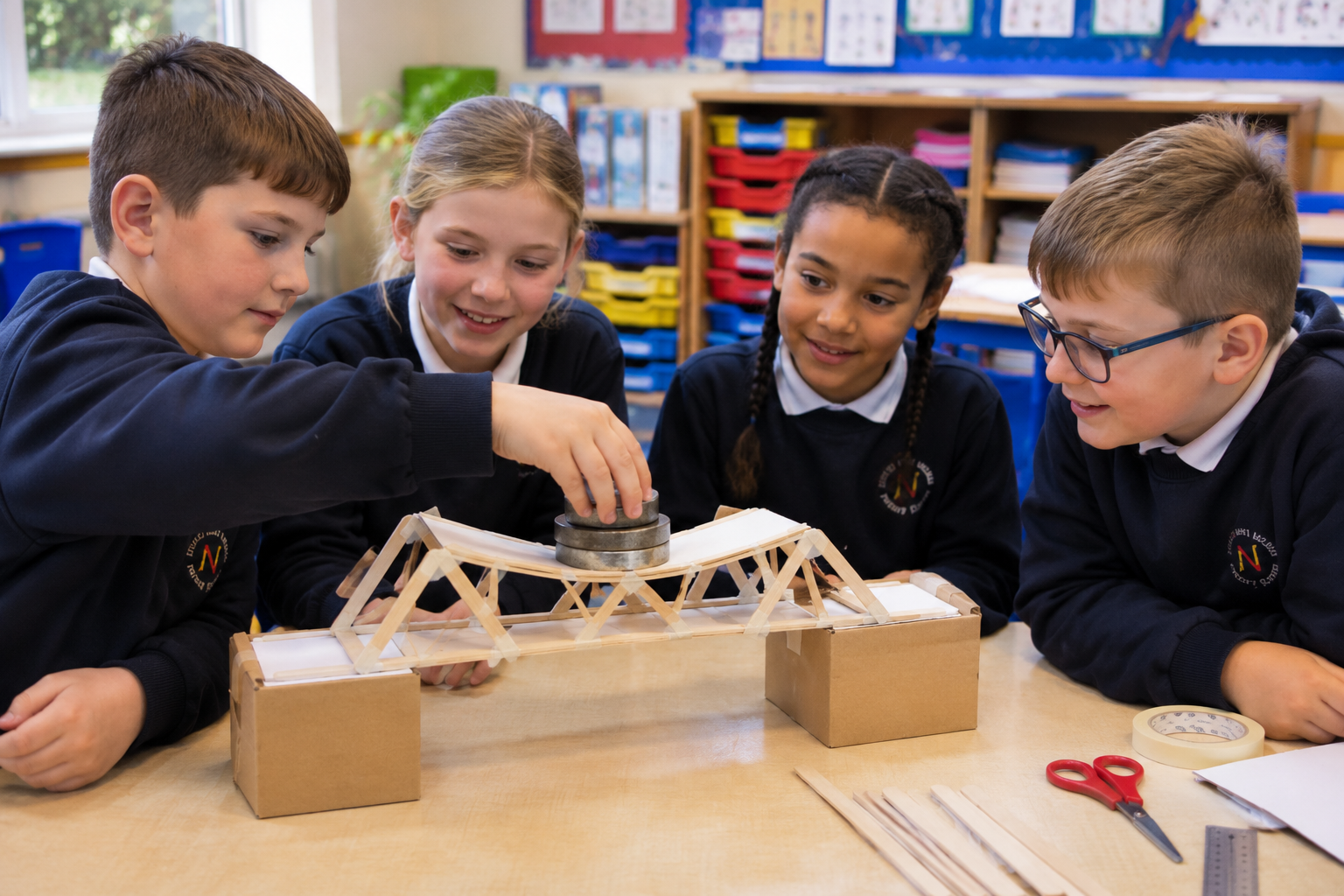
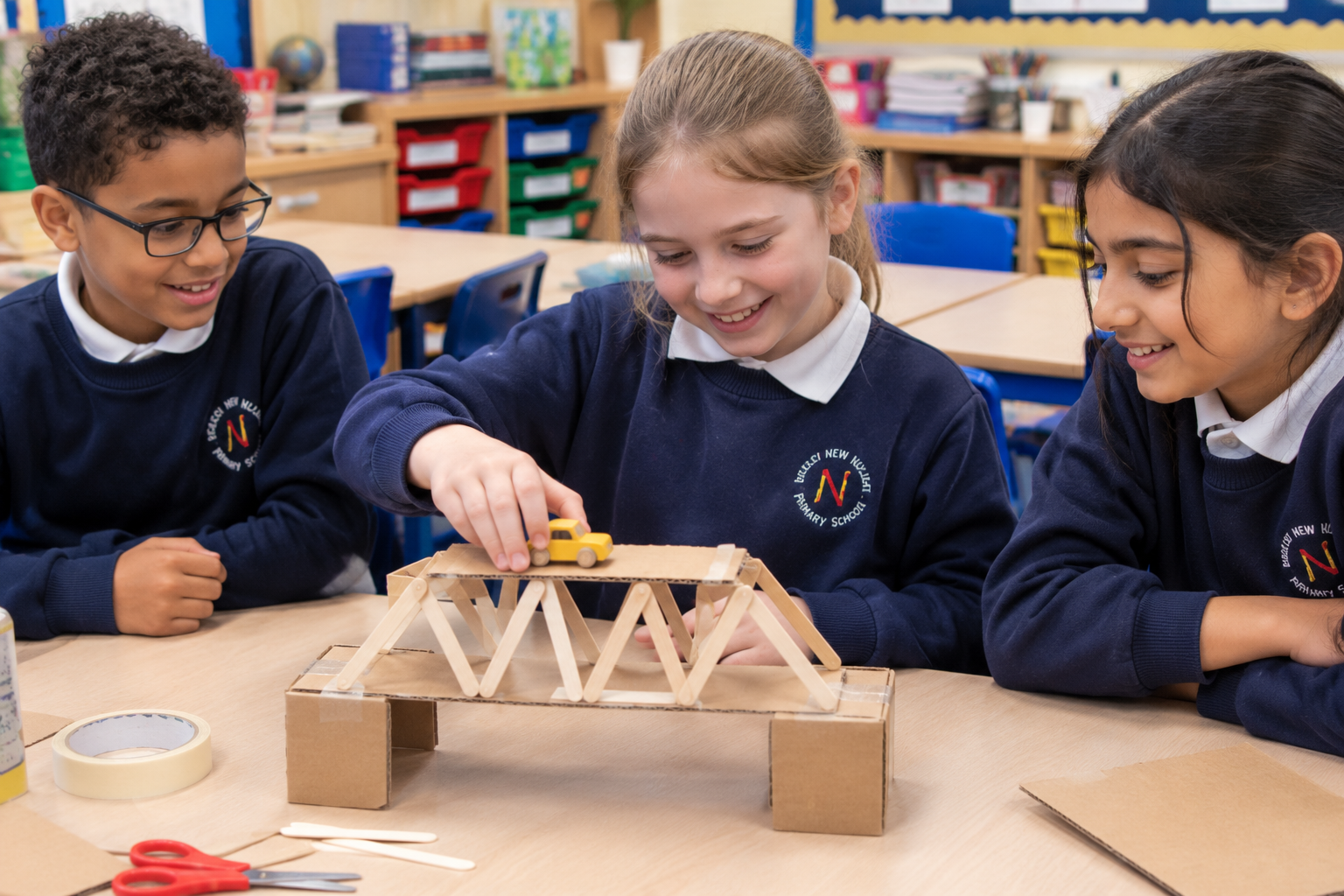
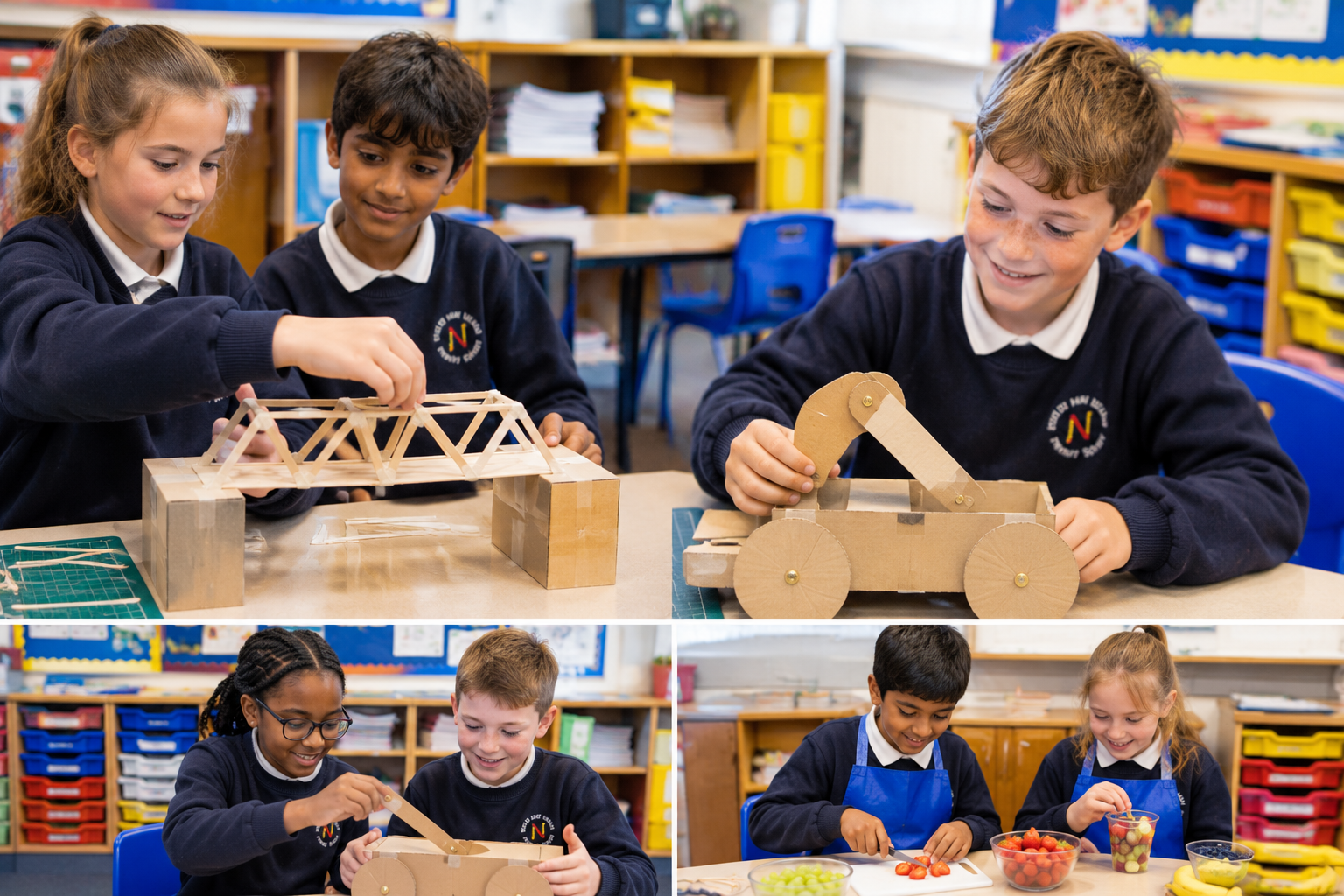
Illustrative AI-generated classroom scenes with fictional pupils, showing practical design, making and testing activities.
Skills grow over time
Learning across the key stages
Children build on earlier knowledge as projects become more challenging and their choices more independent.
Years 1–2
Key Stage 1
Children design and make simple products for themselves and other users. They explore materials, practise practical techniques, build and strengthen structures, try simple mechanisms and begin to judge how well their ideas work.
Years 3–6
Key Stage 2
Children research users and purposes, develop clearer design criteria and communicate ideas in more detail. They select from a wider range of materials and tools, use technical knowledge in their designs, and test and improve products against their aims.
Knowledge in action
Making links between ideas and the real world
Materials and mechanisms
Children explore how materials behave and how structures, moving parts and systems can help a product do its job.
Food and nutrition
Cooking and nutrition help children understand healthy eating, where food comes from and how ingredients can be prepared and used.
People and products
Looking at existing products and the work of designers helps children see how design responds to people’s needs and shapes everyday life.
Design thinking in practice
What might children design and make?
Practical design challenges can bring learning to life. These are examples of the kinds of activities that help children apply their knowledge.
Strong structures
Investigate how shapes and materials affect strength, then plan, build and test a model bridge or shelter.
Moving mechanisms
Explore levers, sliders, wheels and axles to create a product with purposeful movement.
Food and nutrition
Consider ingredients, hygiene and healthy choices while planning and preparing a simple food product.
Keep exploring
Design thinking at home
Encourage your child to spot everyday problems and think about how objects could work better. Even simple conversations help children practise the language of designing and evaluating.
- Who is this product for, and what does it need to do?
- Which materials would work best, and why?
- What would you change after testing your idea?
What progress looks like
Confident, thoughtful problem-solvers
Through practical projects, children learn to explain their choices as well as make a finished product. They develop the confidence to try, test, learn from what happens and keep improving.
- identify a need and design for a user
- choose materials and techniques with care
- use tools and equipment safely
- test ideas and explain how to improve them